State Democrats in Key Georgia Races Are Raising Less Money This Election Cycle
Record amounts of money are being poured into races for state offices across the nation. But this trend is being bucked in Georgia, where Democrats have seen a dip in fundraising hauls
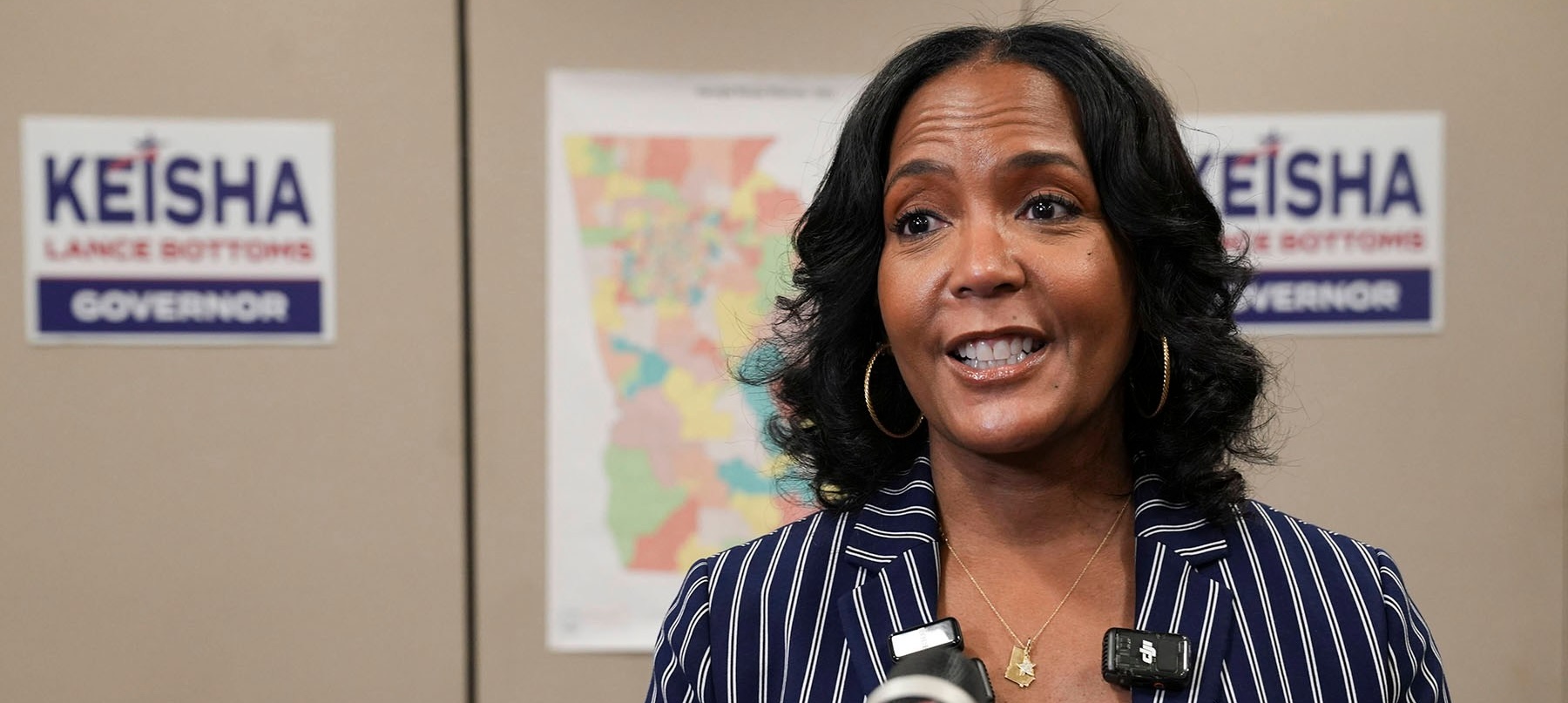

Despite a strong slate of candidates for the 2026 midterms, Georgia Democrats in key statewide races are raising less money this election cycle compared to previous years.
This phenomenon bucks the national trend of increased spending on state races across the United States. The decrease in campaign war chests, which experts attributed to a decrease in donations from state and national organizations more than individuals, could put Georgia Democrats at a disadvantage against their Republican counterparts this midterm cycle.
Multiple experts told The Caucus that they believe it is likely that Georgia voters will send Sen. Jon Ossoff (D) back to the Senate but elect Republican candidates to critical state offices with open seats.
“The governorship, the lieutenant governor race, the secretary of state, and the attorney general race are all open seats,” said Trey Hood, a professor of political science at the University of Georgia. “They all should be pretty competitive.”
Though the predicted split-ballot votes could partially be attributed to Ossoff’s incumbent advantage and his challenger, Rep. Mike Collins’s (GA-10), missteps, University of West Georgia political science professor Karen Owen said Democrats’ funding disadvantage could play a role in possible statewide losses.
“If you have less campaign dollars, less of a fundraising advantage than your opponent, you can’t get out your message quickly enough or fast enough to reach voters,” Owen said.
According to campaign reports filed with the state ethics commission, as of July former Atlanta mayor Keisha Lance Bottoms, who’s running for governor against billionaire health executive Rick Johnson, had raised $5.7 million this election cycle compared to her opponents $118.9 million — but most of that was his own cash. Updated reports are due on Oct. 25, just days ahead of the election.
In the lieutenant governor’s race, Democratic state Sen. Josh McLaurin raised $653,000 compared to his opponent Republican state Sen. Greg Dolezal’s $1.7 million haul. State Rep. Tanya Miller’s campaign for attorney general drew $883,000 in donations compared to her Republican opponent, state Sen. Brian Strickland, who took home $1.4 million.
One of the only Georgia Democrats to outraise her opponent was Peggy Brown Reynolds, the Democratic candidate for secretary of state. She brought in $873,000 while Republican Tim Fleming secured $655,000.
This does not include outside spending on races in the state and across the country. Super PACs affiliated or aligned with the Republican party have flooded races across the country with outside cash, which they have used to boost GOP candidate campaigns through outreach efforts that include digital advertising.
Though Democrats’ funding hauls are far from insignificant, they’ve paled not only in comparison to their Republican opponents but to Democratic candidates in prior years — most of whom did not win state offices.
In 2022, Democratic Georgia governor candidate Stacey Abrams raised a record $113 million in her race against Republican Gov. Brian Kemp through both direct campaign contributions and her One Georgia Committee. In the lieutenant governor, attorney general, and secretary of state races, Democratic candidates had raised millions by the midyear mark — a far cry from where this year’s Democratic candidates found themselves at the end of July, the last period for which there are state campaign finance reports.
Experts attributed this drop in funding at least partly to decreased national attention on Georgia state races. Abrams, who ran for governor in 2018 and 2022 against Kemp, received widespread coverage during both her bids for the state’s highest office.
“With Stacey Abrams, she early on cultivated this national profile much more so than Keisha Lance Bottoms,” said Seth McKee, a professor of political science at Oklahoma State University who has extensively researched Georgia state politics. “This is someone who became sort of a media darling.”
“She was able to really fundraise exceptionally well nationally,” Owen, the University of West Georgia professor, said. She added that Abrams had been able to bring in “a lot of outside dollars to support her candidacy” as well as organize groups to drive grassroots action on her behalf.
Part of the outpouring of funding to state Democrats’ races in Georgia in 2022 could be attributed both to Abrams’ herself and Democrats’ efforts to flip Georgia, which seemed possible since the state had gone to Biden during the 2020 presidential election, Owen said.
“Democrats saw an opportunity here, that they could start to flip the state in 2022, so they were pouring in a lot more money,” Owen said. And Abrams, with her own campaign funds, had sought to support down-ballot Democrats as well.
Like Abrams’ 2022 rematch against Kemp, Ossoff’s race against Collins has garnered national attention as Democrats fight to flip the U.S. Senate. His seat is likely a must-hold for the party if it wants a shot to control the upper chamber. This hasn’t translated to increased down-ballot funding for statewide Democratic races this year, however, as Democrats focus on federal races that could determine control of Congress.
But Thomas Hunter, a professor of political science at the University of West Georgia, noted that races for statewide offices in Georgia could prove just as critical as races like Ossoff’s in the long run.
“Some of these lower races are just as important to build the Democratic bench for future elections because they’ve never won a statewide state executive race since 2006,” Hunter said. The results of this race could have implications for the 2028 and even 2030 elections, he added.
Though Ossoff now enjoys a clear lead against Collins for Georgia’s Senate seat, Bottoms is trailing Jackson by a few percentage points in recent polling, indicating a competitive race is still in play between the two gubernatorial candidates. Fewer surveys have been done on voters’ candidate preferences in lower-ballot races, including the lieutenant governor, attorney general and secretary of state positions. But if Georgia voters lean toward Democrats this election cycle, the state has the opportunity to make history.
Bottoms, Miller, and Brown Reynolds could be the first Black women to hold the offices that they’re running for if they defeat their Republican opponents. Though they have trailed their opponents in funding, Republicans’ cash advantage — while troublesome for Democrats — might not overcome how favorable the national political environment is for Democrats.
Dr. Alicia Johnson, a member of the Georgia Public Service Commission and the first Black woman to be elected to a statewide office in Georgia, noted that her campaign and other Democratic campaigns had been successful despite not raising significant amounts of cash.
“I believe our ability to galvanize the base and having a ground strategy that’s rooted in hearing and touching the people across the state in the field has proved to be successful,” Johnson said.