Why Undecided Voters Don’t Seem Likely to Break for the GOP
On the generic ballot, the Democrats’ lead has held steady
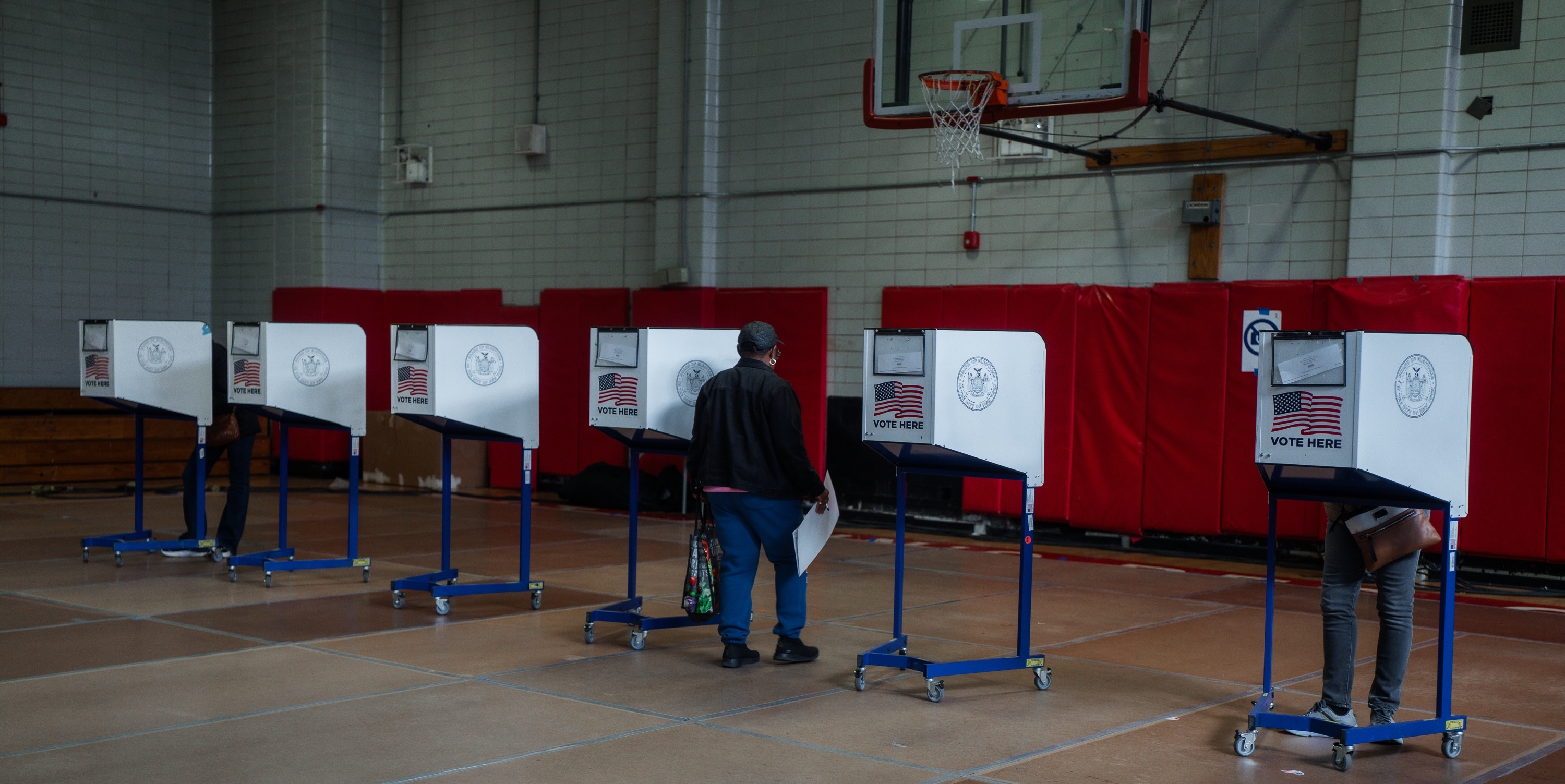

In the past week, polls have held steady for Democrats in competitive Senate races as Republicans pull back from districts that were expected to be the most competitive this cycle, a sign that Republicans are preparing for a route on election day.
In the battle for the House, the bottom seems to have started falling out for Republicans. The Congressional Leadership Fund, a PAC supporting GOP House candidates, has started pulling money from four districts that were seen as competitive in order to secure a slate of races in districts that Republicans see as more likely to deliver them a victory. The CLF is not the only GOP aligned PAC to make reallocations this week either, and all of these reallocations come against the backdrop of a Politico report detailing how Republicans are privately considering the battle for the House already lost.
On the generic ballot, the Democrats’ lead has held steady. The Real Clear Politics average of polls has the Democrats maintaining an 8-point lead. The consistent edge is holding at a time when Republicans would hope that their voters would be “coming home,” a term analysts use to describe the phenomenon of undecided voters breaking for their preferred party in the final days of the race.
Logan Phillips, the founder of Race to the WH, said that this failure of undecided voters to break for Republicans, as has happened in many previous elections, is the trend he’s watching in the final weeks of the midterms. In his analysis, the current makeup of undecided voters isn’t as demographically friendly to Republicans as it has been in previous cycles.
“I have been tracking for a large part of the cycle how voters are breaking down by demographic. Last cycle and the cycle before that, the signal showed Republicans had a real chance to gain in some of these races like the Ohio Senate race, because the undecideds were disproportionately Republican,” Phillips said. “And if you break down by each party, what percent that undecided House voters broke in, and do the same thing by race and all sorts of other stuff, there really was a signal that Republicans were going to gain. That signal does not exist now, and it hasn't existed for most of this race.”
This means that even in states that are polling fairly closely, like Michigan, Minnesota, and Kansas, Republicans will probably be relying on a fairly substantial polling miss come election day.
At the same time, Phillips said, there are still races coming onto the board that could end up being a surprise in favor of Democrats.
Phillips pointed to a recent survey out of Mississippi as a potential harbinger of an election night upset in favor of the Democrats. A recent Wedgewood Polls survey found the Democratic nominee, Scott Colom, trailing Sen. Cindy Hyde-Smith (R-Miss.) by just 4 points. While Phillips said he still expects Mississippi to go to the Republicans, he underscored that polling can miss in either direction, and that a Democratic overperformance could end up delivering a larger Senate majority than nearly anyone believed was possible following the 2024 election.
“I think it's pretty clear that the Democrats are decisively favored, and that this will likely be a wave of some kind, probably a big wave. And I think the real question is how big is this going to be?” Phillips said.